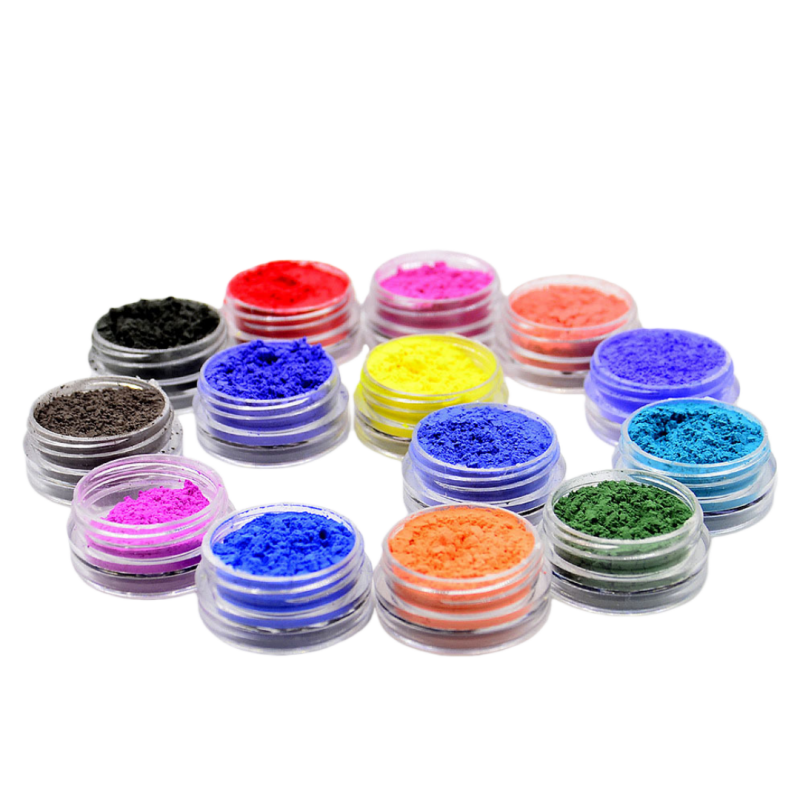
Reversible Thermochromic pigment –The Science of Change:
Thermochromic Pigment are “smart” colorants that change their appearance in response to temperature fluctuations. Unlike traditional static dyes, these pigments act as a visual thermometer, transitioning between colors or moving from a solid hue to a transparent state once a specific thermal threshold—known as the Activation Point—is reached.
Thermochroom pigment are thermochromic micro capsules in a powder pigment form. They have been specially designed for use in non aqueous based ink systems although their use is not limited.
They can be used to formulate non aqueous based flexographic, UV, Screen, Offset, Gravure and Epoxy Ink formulations (for aqueous applications we would recommend using Thermochromic slurries).
Thermochromic Powders are colored below a specific temperature, and change to colorless or to another, lighter color as they are heated through the temperature range. These pigments are available in various colors and activation temperatures.
How It Works: The Microencapsulation Thermochromic pigment Secret
Modern thermochromic pigment (primarily Leuco Dyes) are engineered through advanced microencapsulation. Inside each microscopic droplet is a complex mixture of a color-former, a color-developer, and a solvent.
- Below Threshold: The internal components are in a solid state, allowing the molecules to interact and reflect a vibrant color.
- At Activation Point: As heat is applied, the internal solvent melts. This physically separates the color-former from the developer.
- The Result: The pigment becomes colorless (translucent), revealing whatever is underneath—whether it’s a hidden message, a secondary base color, or a printed graphic.
- Reversibility: Once the heat source is removed and the material cools, the process reverses, and the original color “magically” reappears.
Key Features & Performance
- Precision Temperature Windows: Themochromic Pigment can be calibrated to react at specific points, ranging from -15°C (5°F) for cold-chain packaging to 70°C (158°F) for industrial safety warnings.
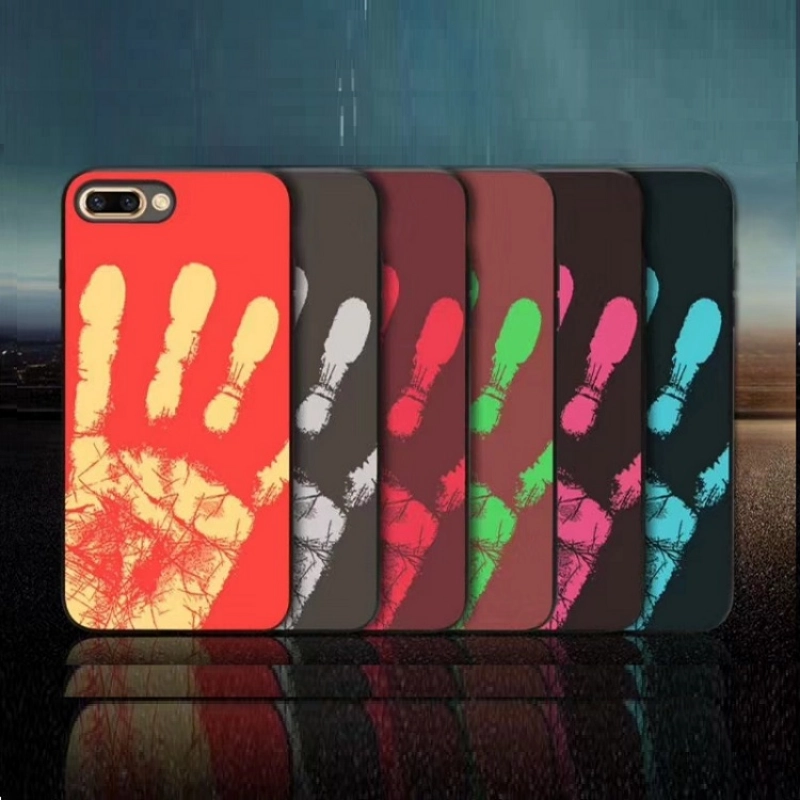
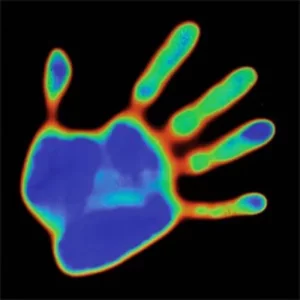
- Body-Heat Sensitivity: The most popular grade activates at 31°C (88°F). This makes the pigment change color instantly upon human touch, perfect for interactive marketing and textiles.
- High Contrast: Provides a sharp, visual “On/Off” signal that is much faster for the human brain to process than reading a digital display.
- Versatile Mediums: Available as a fine powder or a water-based slurry, it can be mixed into epoxy resins, screen-printing inks, Kunststoffen (injection molding), and industrial coatings.
Industrial vs. Creative Applications
| Toepassing | Usage Scenario | Purpose |
| Smart Packaging | Beer cans or wine labels. | “Perfect Chill” indicator for the consumer. |
| Industrial Safety | Steam pipes or electrical cables. | Visual warning of overheating or “hot to touch” surfaces. |
| Smart Textiles | Fitness apparel or high-fashion. | Changes color based on body heat or environmental temp. |
| Security & Logic | Anti-counterfeit labels. | Authenticate products by simply rubbing the label with a finger. |
| Creative Arts | Coffee mugs and “magic” art. | Reveals a hidden image when a hot beverage is added. |
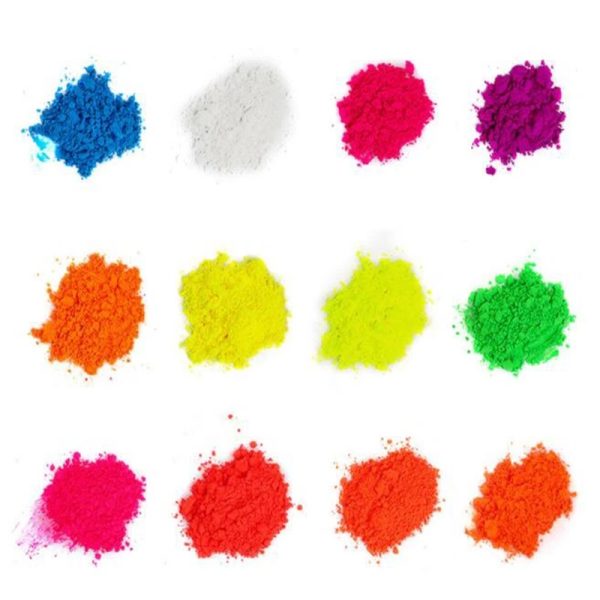
Standard Colors: Zwart, Blauw, Magenta, Groen, Orange & Rood.
Standard Activation Temperatures: 15°C, 31°C ,37°C ,47°C. (customize -15°C – 80°C)
Technical Specifications
Vaste stoffen: 98% +/- 2%
Particle Size: <6 microns (97%)
Light Fastness (Blue wool Scale): 1 – 2
Shelf Life: 12 months
All raw materials used for production of Thermochromic pigments are listed in EINECS, TSCA and DSL/NDSL.
Storage and Handling
Thermochromic Powders are more sensitive to the influences of solvents, UV light, pH, Shear and temperature than many other types of pigment. It should be noted that there are differences in performance of the various colors so that each should be thoroughly tested before commercial application.
Thermochromic Powders have excellent stability when stored away from heat. Store below 25°C. Do not allow to freeze, as this will damage the thermochromic capsules. A shelf life of 12 months is guaranteed provided that the material is stored in a cool and dark environment. Long term exposure to UV light or elevated temperature can cause loss of thermochromic function. Storage longer than twelve months is not recommended.
Veelgestelde vragen:
What is a Thermochromic Pigment and how does it work?
A thermochromic pigment is a ‘smart’ colorant that changes its appearance in response to temperature fluctuations through a process involving microencapsulation of a complex mixture inside tiny droplets. When the temperature is below a certain threshold, the pigment displays its vibrant color; when heated past the activation point, it becomes colorless or lighter, revealing underneath elements. Once cooled, the original color reappears, making the process reversible.
What is microencapsulation in thermochromic pigments, and why is it important?
Microencapsulation in thermochromic pigments involves enclosing the color-changing components within microscopic droplets, which allows for precise control over the temperature at which color change occurs and ensures the pigment’s stability and reversibility during heating and cooling cycles.
What are the typical activation temperatures for thermochromic pigments?
Thermochromic pigments are available with various activation temperatures, including standard options like 15°C, 31°C, 37°C, and 47°C, but they can be customized to activate within a range of -15°C to 80°C according to specific application requirements.
In which applications can thermochromic pigments be utilized?
Thermochromic pigments are used in applications such as smart packaging, industrial safety warnings, smart textiles, security labels, anti-counterfeit markings, and creative arts like mood mugs or interactive art, due to their ability to indicate temperature changes visually.
What precautions should be considered when handling and storing thermochromic powders?
Thermochromic powders should be stored below 25°C in a cool, dark environment, and must be protected from UV light, solvents, high pH, shear, and elevated temperatures to prevent performance degradation. They should not be frozen or exposed to long-term UV or heat, as this can impair their thermochromic function and performance lifespan.