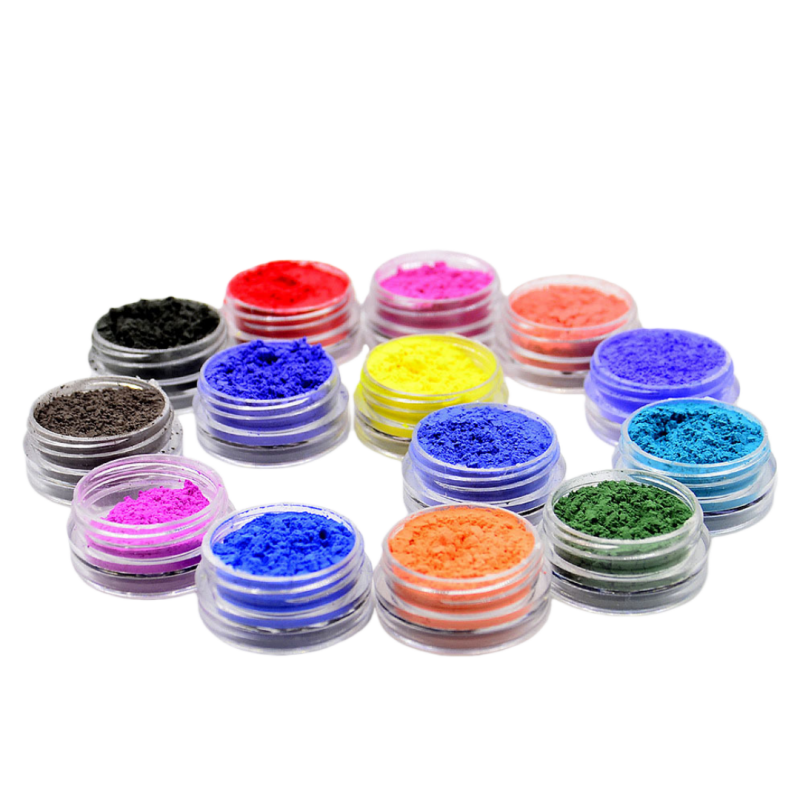
Termocrômico pigmentos –The Science of Change:
Thermochromic Pigment are “smart” colorants that change their appearance in response to temperature fluctuations. Unlike traditional static dyes, these pigments act as a visual thermometer, transitioning between colors or moving from a solid hue to a transparent state once a specific thermal threshold—known as the Activation Point—is reached.
Termocrômico pigmentos são micro cápsulas termocrômicas em forma de pigmento em pó. They have been specially designed for use in non aqueous based ink systems although their use is not limited.
Eles podem ser usados para formular flexográfico não aquoso à base, Uv, Tela, Deslocamento, Formulações de tinta gravure e epóxi (para aplicações aquosas recomendamos o uso de pastas termocrômicas).
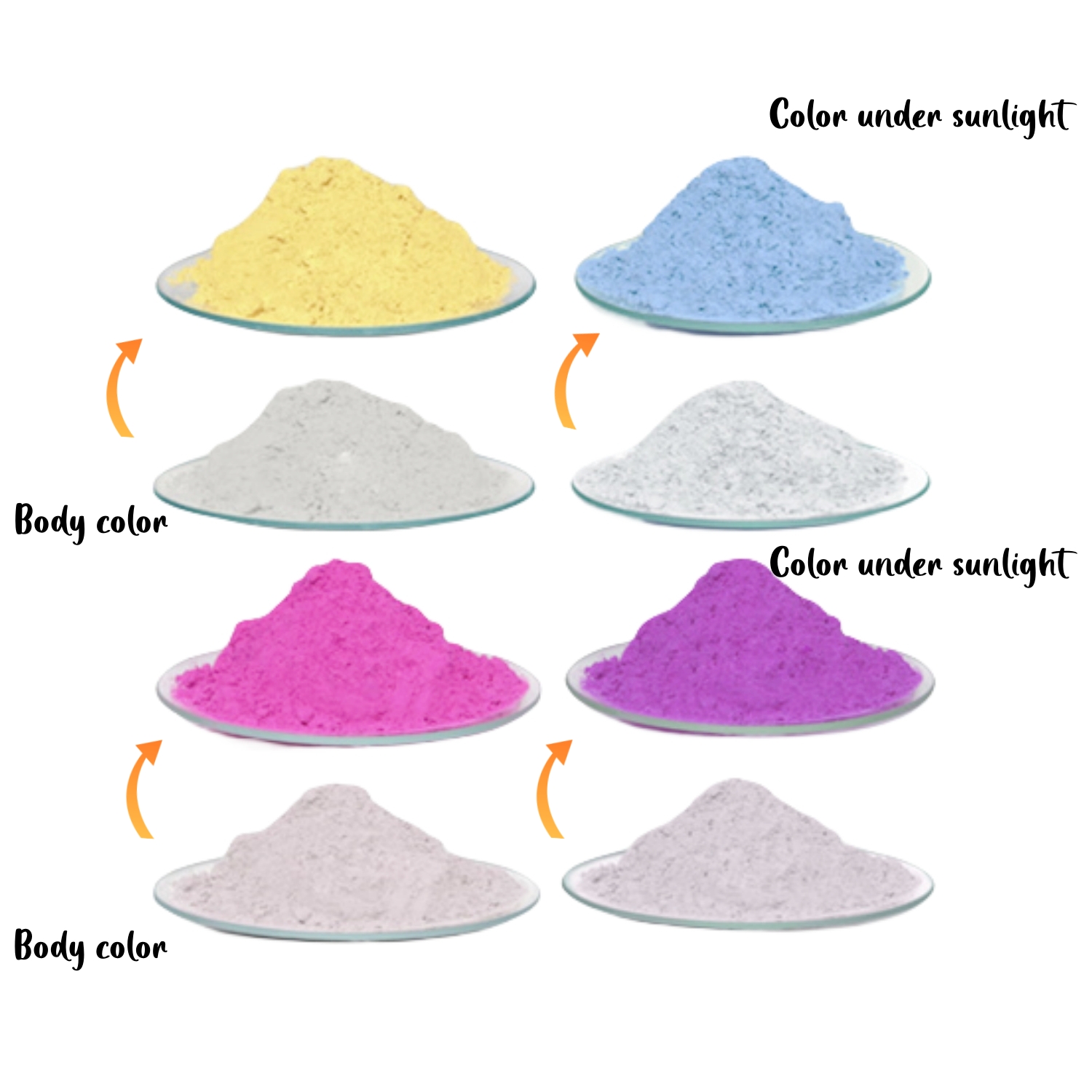
Os pós termocrômicos são coloridos abaixo de uma temperatura específica, e mudar para incolor ou para outro, cor mais clara como eles são aquecidos através da faixa de temperatura. Estes pigmentos estão disponíveis em várias cores e temperaturas de ativação.
How It Works: The Microencapsulation Secret
Modern thermochromic pigments (primarily Leuco Dyes) are engineered through advanced microencapsulation. Inside each microscopic droplet is a complex mixture of a color-former, a color-developer, and a solvent.
- Below Threshold: The internal components are in a solid state, allowing the molecules to interact and reflect a vibrant color.
- At Activation Point: As heat is applied, the internal solvent melts. This physically separates the color-former from the developer.
- The Result: The pigment becomes colorless (translucent), revealing whatever is underneath—whether it’s a hidden message, a secondary base color, or a printed graphic.
- Reversibility: Once the heat source is removed and the material cools, the process reverses, and the original color “magically” reappears.
Key Features & Performance
- Precision Temperature Windows: Pigments can be calibrated to react at specific points, ranging from -15° c (5°F) for cold-chain packaging to 70° c (158°F) for industrial safety warnings.
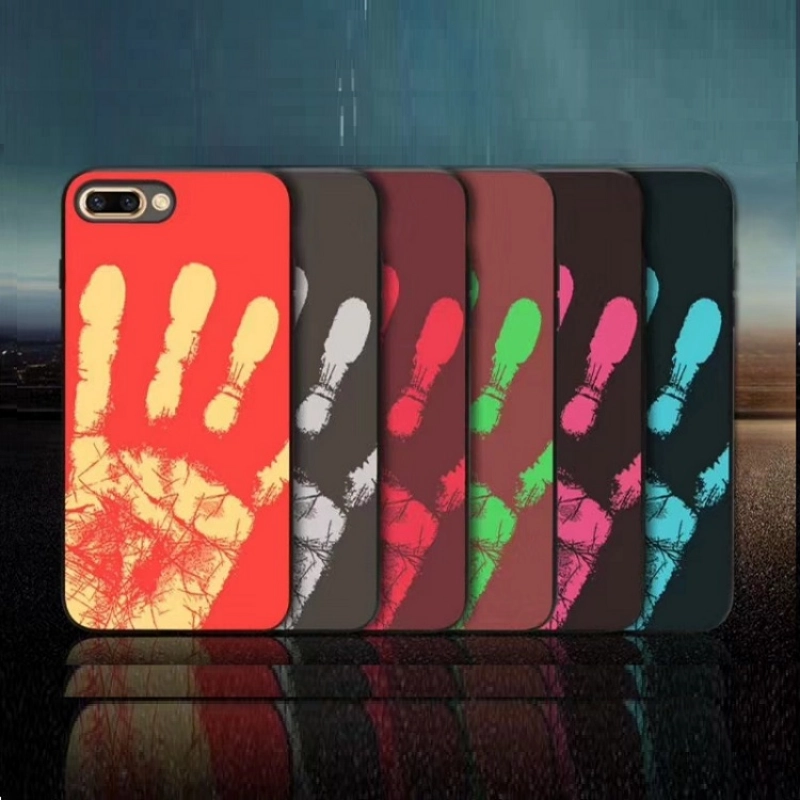
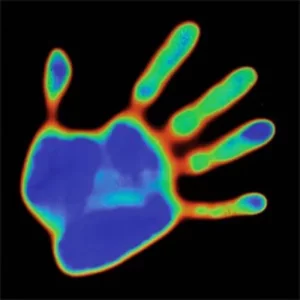
- Body-Heat Sensitivity: The most popular grade activates at 31° c (88°F). This makes the pigment change color instantly upon human touch, perfect for interactive marketing and textiles.
- High Contrast: Provides a sharp, visual “On/Off” signal that is much faster for the human brain to process than reading a digital display.
- Versatile Mediums: Available as a fine powder or a water-based slurry, it can be mixed into epoxy resins, screen-printing inks, plásticos (injection molding), and industrial coatings.
Industrial vs. Creative Applications
| Aplicação | Usage Scenario | Purpose |
| Smart Packaging | Beer cans or wine labels. | “Perfect Chill” indicator for the consumer. |
| Industrial Safety | Steam pipes or electrical cables. | Visual warning of overheating or “hot to touch” surfaces. |
| Smart Textiles | Fitness apparel or high-fashion. | Changes color based on body heat or environmental temp. |
| Security & Logic | Anti-counterfeit labels. | Authenticate products by simply rubbing the label with a finger. |
| Creative Arts | Coffee mugs and “magic” art. | Reveals a hidden image when a hot beverage is added. |
Cores padrão: Preto, Azul, Magenta, Verde, Laranja & Vermelho.
Temperaturas de ativação padrão: 15° c, 31° c ,37° c ,47° c. (customize -15°C – 80° c)
Especificações técnicas
Sólidos: 98% +/- 2%
Tamanho da partícula: <6 Mícrons (97%)
Púlvere leve (Escala de lã azul): 1 – 2
Vida útil: 12 meses
Todas as matérias-primas utilizadas para a produção de pigmentos termocrômicos estão listadas no EINECS, TSCA e DSL/NDSL.
Armazenamento e manuseio
Os pós termocrômicos são mais sensíveis às influências dos solventes, Luz UV, Ph, Cisalhamento e temperatura do que muitos outros tipos de pigmento. Note-se que existem diferenças no desempenho das várias cores para que cada um deve ser completamente testado antes da aplicação comercial.
Os pós termocrômicos têm excelente estabilidade quando armazenados longe do calor. Armazenar abaixo de 25°C. Não deixe congelar, como isso irá danificar as cápsulas termocrômicas. Uma vida útil de 12 meses é garantido, desde que o material é armazenado em um ambiente fresco e escuro. A exposição a longo prazo à luz UV ou à temperatura elevada pode causar perda de função termocrômica. O armazenamento superior a doze meses não é recomendado.