Invisible Security: 365nm invisible Fluorescent Pigment
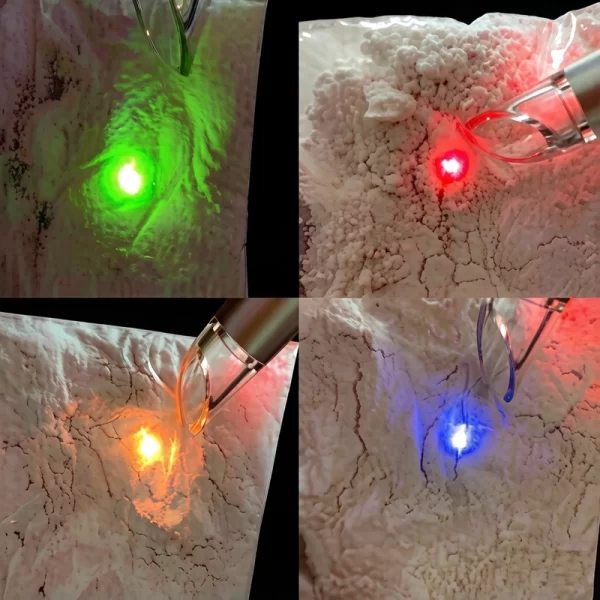
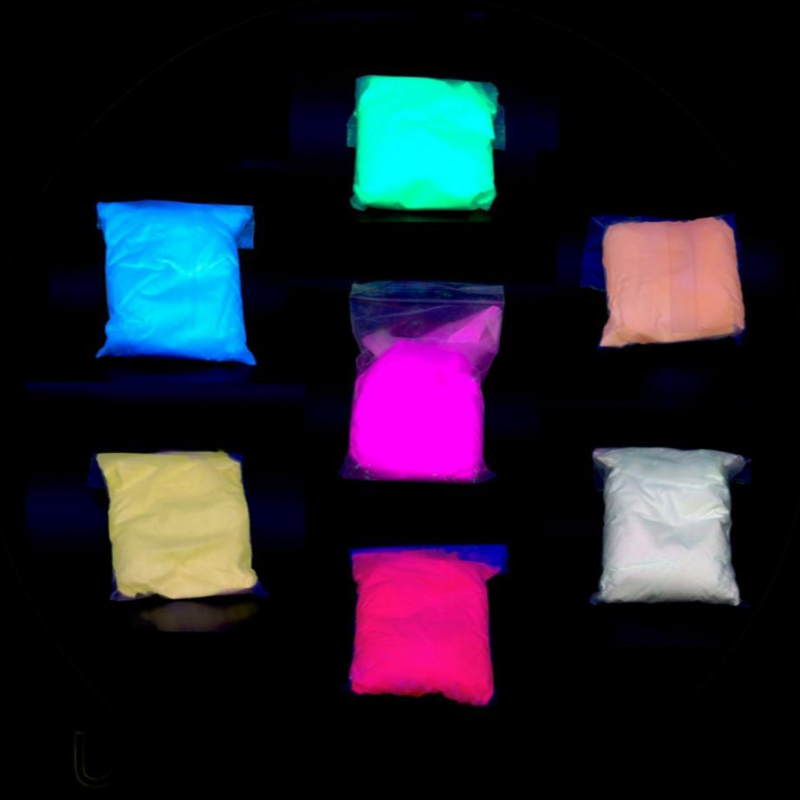
365nm Invisible Fluorescent Pigment (also known as “Long-Wave” or “Blacklight” pigment) is a high-performance functional additive used primarily for covert authentication and industrial tracing. Unlike standard neon pigments that are visible in daylight, these specialized particles remain completely transparent or white in ambient light, revealing their vibrant colors only when targeted by a ultraviolet light source,especialy by 365nm UV light.
How It Works: The “Hidden” Glow
- The invisible fluorescent pigment utilizes a photophysical process called fluorescence. When the “invisible” molecules are struck by 365Nm UV photons, they absorb the energy and instantly re-emit it at a longer, visible wavelength.
- Total Concealment: In its “ground state,” the blacklight reactive powder has no absorption in the visible spectrum (400–700nm), making it undetectable on white paper, plastic, or fabric.
- Instant Verification: The transition from invisible to Vibrant colors happens in nanoseconds and is fully reversible. Once the UV source is removed, the mark disappears immediately.
- Long-Wave Specificity: It is specifically tuned for UV-A (365Nm), which is the most common and safest UV wavelength used in handheld scanners and industrial LED lamps.
Key Technical Features
- Superior Stability: Available in both Inorganic (Metal Oxide) and Organic versions. Inorganic grades offer extreme heat resistance (up to 600°C+) and “Blue Wool” lightfastness ratings of 7–8, ensuring the mark stays functional for years.
- Non-Migratory: The insoluble nature of the pigment prevents it from “bleeding” or migrating through layers of plastic or paper, which is critical for high-resolution security printing.
- Particle Precision: Typically engineered with a sub-micron or low-micron particle size (D90: ≈ 5μm), allowing for seamless integration into offset, flexographic, and inkjet inks without clogging equipment.
- Broad Compatibility: Can be directly incorporated into resins (PE, PP, PLA, ABS, PVC), oil-based varnishes, water-based coatings, and specialized security lacquers.
| Sector | Usage Scenario | Purpose |
| Security Printing | Banknotes, tax stamps, and passports. | High-level covert authentication and anti-counterfeiting. |
| Brand Protection | Luxury goods and pharmaceutical labels. | Discrete “Track & Trace” to prevent product diversion and gray-market sales. |
| Industrial Tracing | Automotive and HVAC fluid systems. | Invisible leak detection; identifying exact exit points in complex machinery. |
| Forensic Marking | “Theft-tracking” powders. | Transfers to skin/clothing upon contact to prove a “chain of custody.” |
| Logistics | Invisible barcodes and QR codes. | Automated sorting and inventory management without altering packaging aesthetics. |

365nm UV invisible Fluorescent Pigment for security, identificatie, Toepassingen voor codering en bestrijding van namaak.
Deze pigmenten dag kleur, met een wit tot gebroken wit poederuiterlijk, en zijn niet merkbaar wanneer ze in beveiligingsinkten zijn verwerkt, Vezels en papier. Bij bestraling met UV-licht (Zwart licht), Deze pigmenten zullen fluorescerend geel licht uitstralen, groen, rood, blauw,wit,violet,oranje kleuren en zijn direct herkenbaar. Enkele van de meest voorkomende toepassingen zijn in postzegels, Valutabiljetten, Creditcards, loten, Veiligheidspassen, enz.
Toepassingen: Het kan worden toegevoegd aan verschillende media zoals verf, Drukinkt, Kunststoffen, rubber, Voertuigen op basis van glas en water van alle soorten. Deze speciale poeders worden veel gebruikt bij het tegengaan van namaak, anti-diefstal, decoratie, Beveiliging van documenten, advertenties en zowat overal waar u een onzichtbaar fluorescerend pigment van hoge kwaliteit nodig heeft. Het wordt veel gebruikt in beveiliging of andere high-end producten.
Technologie Index:
1: Er is geen zichtbare mechanische onzuiverheid toegestaan in het poeder.
2: Dichtheid:d≤3,4±0,02 g/cm³
3: Mediane deeltjesdiameter:d50≤5.0±0.5μm
4: Relatieve helderheid≥99%
5: Belangrijkste piekgolflengte van het emitterende spectrum: 505Nm.
6: Smeltpunt: Dissocieert 1250 C.
7: Oplosbaarheid in water: onoplosbaar.
8: Soortelijk gewicht: 3.2-3.6