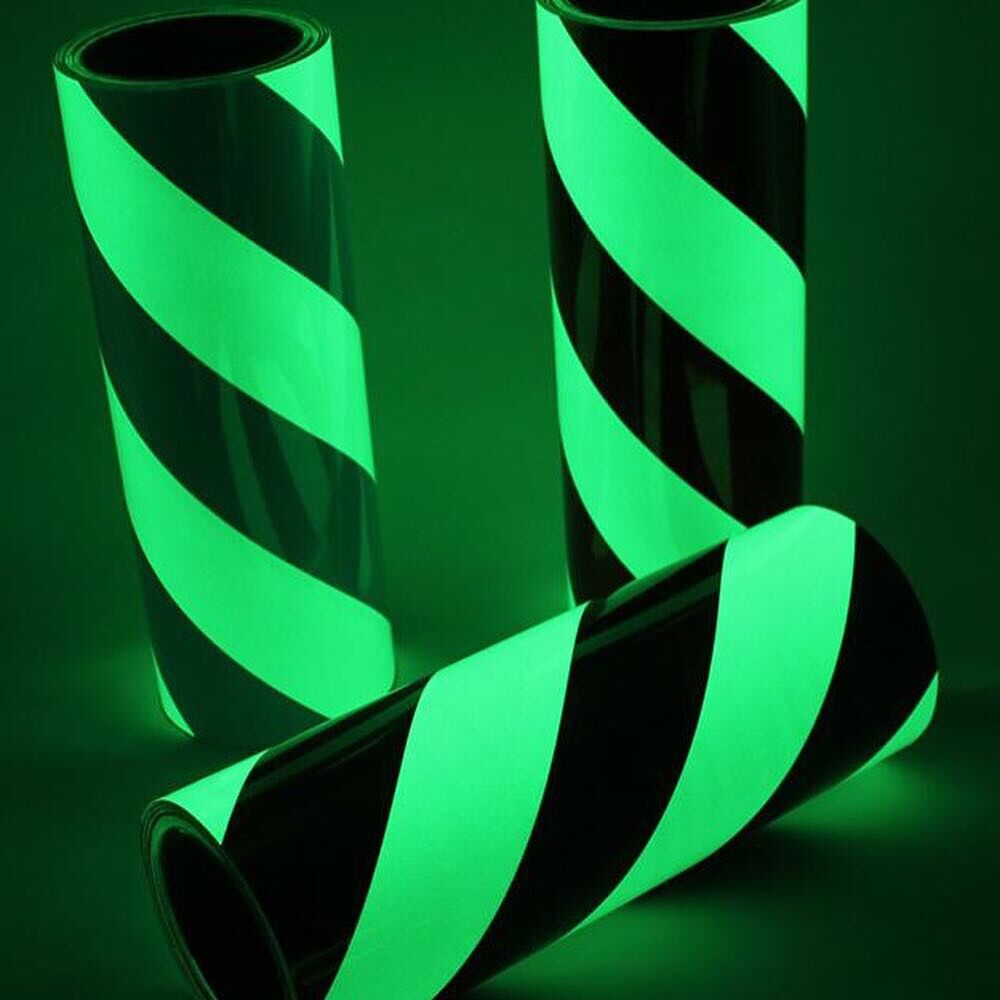
Whether you are producing emergency evacuation signage, industrial safety coatings, or custom resin products, choosing the right photoluminescent pigment is critical to performance and compliance.
In this comprehensive guide, we will break down how these advanced materials work, compare key chemistry types, explore primary industrial applications, and show you how to select the right specification for your production line.
What is Photoluminescent Pigment and How Does It Work?
A pigmento fotoluminescente is an inorganic, light-storing compound that absorbs photons from natural sunlight or artificial lighting (UV and visible light). It stores this energy in its crystal structure and gradually releases it as visible light in dark environments.
This process, known as afterglow, is repeatable indefinitely—making these pigments an eco-friendly and maintenance-free lighting solution.
Key Performance Benefits:
- Zero Power Consumption: Operates entirely on absorbed light energy.
- Long Afterglow Duration: High-grade pigments can glow visibly for 10 to 12+ hours after a brief light charge.
- Non-Toxic and Eco-Friendly: Free of heavy metals, radioactive elements, or hazardous additives.
- High Thermal & Chemical Stability: Suitable for high-temperature plastic extrusion, injection molding, and solvent-based coatings.
Strontium Aluminate vs. Zinc Sulfide: Which Chemistries Matter?
When sourcing photoluminescent powder, you will primarily encounter two chemical bases: Strontium Aluminate (SrAl2O4) and Zinc Sulfide (ZnS:Cu).
| caratteristica / Property | Strontium Aluminate Pigment (SrAl2O4:Dell'Unione europea,DY) | Zinc Sulfide Pigment (ZnS:Cu) |
| Glow Brightness | Extremely High (up to 10x brighter) | Low to Moderate |
| Afterglow Duration | 10 – 12+ Hours | 1 – 2 Hours |
| Chemical Stability | Excellent (Requires waterproof coating for water-based systems) | Good, but degrades under UV light over time |
| Glow Colors | Yellow-Green, Turchese, Viola, Sky Blue | Yellow-Green |
| Primary Use Cases | Industrial safety signs, road markings, engineering plastics | Novelty toys, low-cost consumer products |
Industry Takeaway: For industrial safety, architectural signage, and premium coatings, Strontium Aluminate is the undisputed industry standard due to its superior brightness and extended afterglow performance.

Key Industrial Applications for Photoluminescent Pigments
Thanks to their versatility, photoluminescent pigments are integrated into a wide range of manufacturing processes:
1. Segnaletica di sicurezza fotoluminescente & Egress Systems
During power outages or emergency evacuations, photoluminescent exit signs, floor directional tapes, and stair nosings provide life-saving visibility. Strontium aluminate pigments meet global safety standards (such as DIN 67510 and ISO 15370) for photoluminescent safety markings.
2. Road Markings & Infrastructure Security
Mixing coarse-grade photoluminescent pigment into road paints or epoxy coatings creates self-illuminating lane dividers, bike paths, and walkway markers, significantly enhancing nighttime transit safety.
3. Plastics & Injection Molding
Masterbatches compounded with photoluminescent powder are used to manufacture glowing handles, helmets, safety switches, and emergency tools across automotive and industrial sectors.
4. Resin Arts, Coatings, and Inks
High-clarity epoxy resins, polyurethane coatings, and screen-printing inks incorporate fine-particle glow powders to deliver striking aesthetic and functional night-glow effects.
How to Select the Right Photoluminescent Pigment for Your Project
Selecting the correct pigment grade requires balancing particle size, moisture exposure, and processing conditions.
1. Dimensione particella (Mesh Size)
- Coarse (150–250 Mesh / 45–65um): Delivers the highest initial brightness and longest afterglow. Ideal for cast resins, safety tiles, and thick coatings.
- Medium (250–350 Mesh / 30–45um): The versatile standard for screen printing, plastic extrusion, and general paints.
- Fine (>400 Mesh / <20messaggistica unificata): Best for thin-film inks, spray painting, and delicate textile printing where smooth dispersion is required.
2. Waterproof (Water-Resistant) Encapsulation
Standard strontium aluminate reacts with water, causing it to lose its luminescent properties over time. If you are formulating water-based paints or using the pigment in high-humidity outdoor environments, always specify surface-treated waterproof photoluminescent pigment.
3. Peak Emission Color
- Yellow-Green (520Nm): The brightest human-eye sensitivity response and longest glow duration.
- Turchese (490Nm): Excellent long-duration afterglow, commonly used in marine and architectural settings.
- Sky Blue (470Nm): Highly aesthetic, ideal for design and decorative applications.
Frequently Asked Questions (FAQ)
Q1: Is photoluminescent pigment safe to handle?
Sì. Modern strontium aluminate photoluminescent pigments are non-toxic, non radioattivo, and environmentally safe. Standard industrial dust protection (such as dust masks and safety glasses) should be worn during handling.
Q2: How long does photoluminescent powder last in production?
The physical lifespan of the pigment crystal structure exceeds 15 to 20 years without losing its capability to charge and glow, provided it is protected from extreme acidic environments and moisture (unless waterproofed).
Q3: Can I mix photoluminescent pigment with colored dyes?
Sì, but transparent or clear binder carriers are recommended. Opaque pigments or dark dyes will block ambient light from reaching the glow particles, significantly reducing brightness.
Sourcing High-Quality Photoluminescent Pigments
When sourcing photoluminescent powders for industrial production, consistent particle distribution, batch-to-batch color stability, and proper safety documentation (MSDS, RoHS, REACH) are crucial.
At L&B GROUP CO.,LTD., we manufacture and supply high-performance photoluminescent pigments, granules, and directional safety materials engineered to meet international safety and quality standards.
- Custom Particle Size Distribution (10 to 300+ Micron)
- Waterproof-Coated Options for Water-Based Systems
- Full Technical Data Sheets (TDS) and MSDS Compliance
Need technical specifications, custom formulations, or bulk quotes for your next project?Contact L & B GROUP Co., Ltd. today
to speak with our technical team or request a sample kit!