Sunlight in a Bottle: Photochromic Pigment
Photochromic Pigment are “smart” materials that undergo a reversible color transformation when exposed to electromagnetic radiation—specifically ultraviolet (UV) light. In 2026, these pigments have evolved from simple novelty items into critical components for UV safety indicators, smart eyewear, and interactive brand protection.
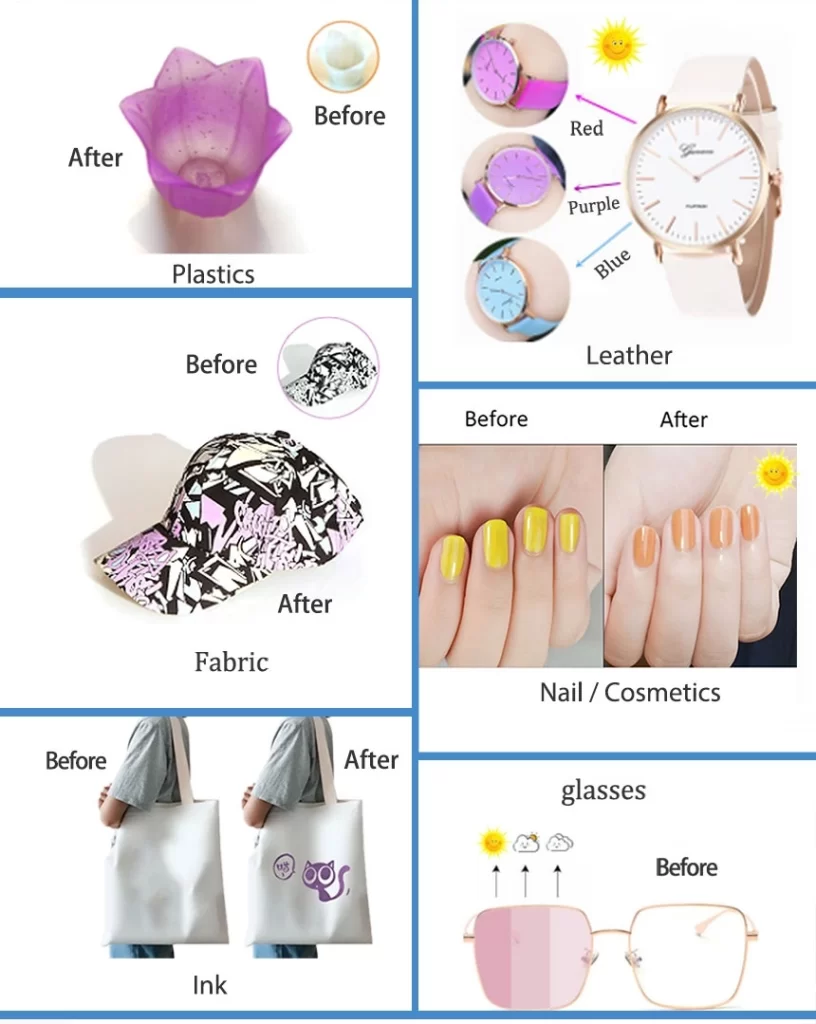
How It Works: The Molecular Switch
The core of photochromic technology lies in specialized organic molecules, such as Spirooxazines or Naphthopyrans.
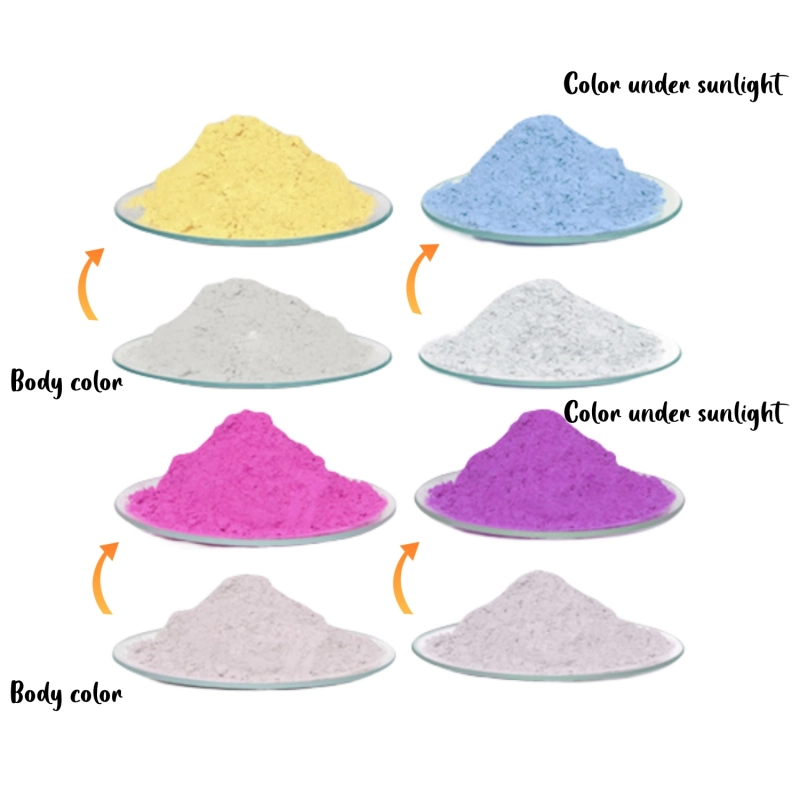
- Indoor State (Resting): The molecules are in a “closed” or folded structure, appearing colorless or transparent.
- Outdoor State (Activated): When UV photons hit the pigment, they trigger a chemical bond cleavage, causing the molecule to “unfold” into a larger, flatter structure called a merocyanine.
- The Result: This new shape absorbs specific visible light wavelengths, making the pigment appear vibrantly colored (Rot, Blau, Lila, Gelb,Etc.).
- Reversibility: Once the UV source is removed, the molecule thermally relaxes back to its closed, colorless state.
Modern Applications & Use Cases
| Industry | Anwendung | Why it Matters |
| Safety & Health | UV Sensor Stickers & Wristbands | Provides a clear visual warning when UV levels are high enough to cause skin damage. |
| Eyewear | Adaptive Photochromic Lenses | Lenses that darken automatically to protect eyes from glare and harmful UV rays. |
| Smart Textiles | “Sun-Print” Apparel | Allows for “hidden” designs that only appear when the wearer steps outdoors. |
| Security | Anti-Counterfeit Labels | An interactive authentication method that is nearly impossible to replicate with standard printers. |
| Consumer Goods | UV-Sensitive Packaging | Indicates to consumers if a product (like wine or medicine) has been exposed to damaging sunlight. |
Photochromic pigment powder are photochromic microcapsules in a powder form . sie sind speziell für den Einsatz in nicht wässrigen Tintensystemen vorgesehen, obwohl ihre Verwendung nicht beschränkt ist . es kann verwendet werden, um nicht wässrige Basis-Flexographie zu formulieren,Uv,Siebdruck,Versatz,Epoxid- und Tiefdruckfarbformulatios. Photochrome Pigmente sind im inaktivierten Zustand farblos,und Farbwechsel bei UV-Lichtquelle. es reagiert auf natürliche Sonneneinstrahlung oder 365nm schwarze Lichter.
Farbe: rot,gelb,blau,grün,Orange,tiefblau, veilchen.
Partikelgröße: <8Mikron
Shelf-life: 2Jahr
Feststoffe: 98% +/-2%