The Science of Brighter Whites: Optical Brightener
Optical Brightener, also known as Fluorescent Whitening Agents (FWAs), are specialized chemical compounds designed to enhance the appearance of color in fabrics, plastics, and paper. Unlike bleaches—which chemically remove stains—optical brighteners work through a clever “optical illusion” that makes materials appear whiter, cleaner, and more brilliant than they actually are.
How optical brightener Work: The “Blue Shift”
Most natural materials (like cotton or recycled plastic) have a slight yellow tint because they absorb a small amount of blue light from the visible spectrum. Optical brighteners fix this using fluorescence:
- UV Absorption: The molecules absorb invisible ultraviolet (UV) light from the sun or overhead lighting.
- Re-emission: They convert that energy and re-emit it as visible blue light.
- The Result: The extra blue light masks the natural yellowness of the material. This creates a “whiter-than-white” effect that the human eye perceives as extreme cleanliness or high-end quality.
Key Features & Benefits for Optical brightener
Neutralizing Yellowing: Essential for maintaining the “new” look of white textiles and preventing the aging look of clear plastics.
- Low Dosage, High Impact: These agents are incredibly potent; even a tiny amount (often less than 0.05%) can drastically change the visual brightness of a product.
- Heat Stability: High-grade industrial brighteners (like OB-1) can withstand temperatures up to 360°C, making them perfect for high-heat plastic injection molding.
- Lightfastness: Quality brighteners are engineered to resist degradation from sunlight, ensuring the “bright” effect lasts for the life of the product.
Common Industrial Grades
In the manufacturing world, optical brighteners are categorized by their specific strengths:
| Grade | Primary Use Case | Best Feature |
| OB | Paints, inks, and soft plastics (PVC/EVA). | Excellent solubility and light resistance. |
| OB-1 | Engineering plastics (PET, PA, PC) and polyester fiber. | Extreme heat stability for high-temp molding. |
| KCB | Synthetic leather and shoe soles. | Vivid blue-violet tone; great for “icy” finishes. |
| KSB | Coatings and transparent films. | Superior compatibility with various polymers. |
Popular Applications
-
Consumer Detergents: The “blue specks” or liquid additives in laundry soap that keep your white shirts looking crisp after dozens of washes.
-
Plastics & Packaging: Used in everything from white milk jugs to clear cosmetic bottles to ensure the plastic looks “clean” rather than recycled or dull.
-
Paper Manufacturing: High-quality printer paper uses these agents to achieve high ISO brightness levels for sharper text contrast.
-
Textiles: Essential for the production of synthetic fibers like polyester and nylon to achieve a “bleached” aesthetic without damaging the fiber’s integrity.
Chemický názov:
2,5-Thiophenediylbis(5-terc-butyl-1,3-benzoxazol)
Synonymum meno:
Uvitex Ob, Tinopal OB, Fluorescenčný zjasňovač 184 (FB 184) , C.I.184, Fluorescenčný zjasňovač OB
Špecifikácia:
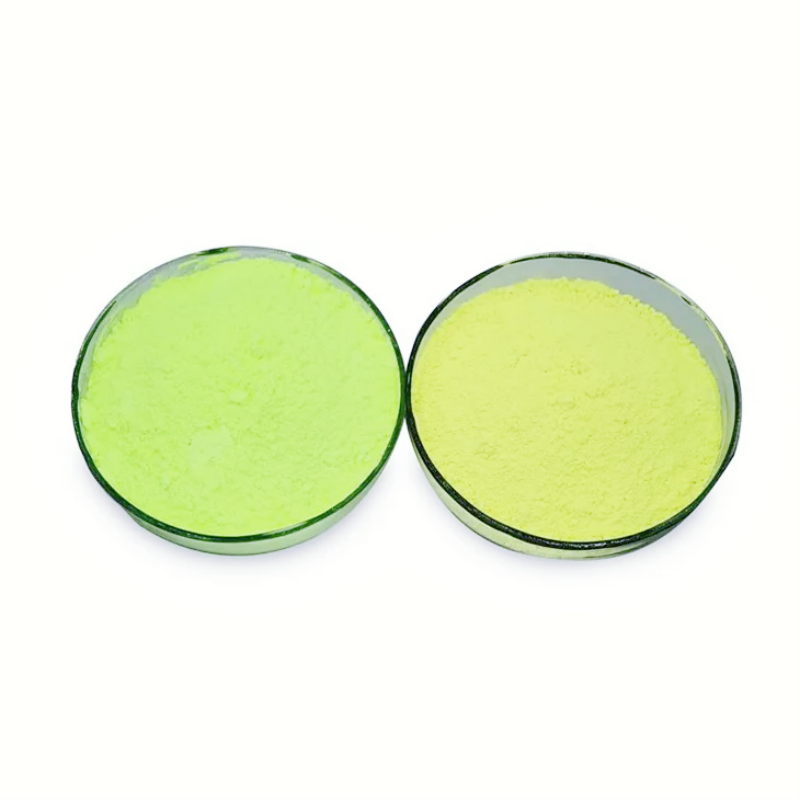
| Vzhľad | Slabý zelenožltý prášok |
| Dávkovanie | 0.01-0.05% |
| Teplota topenia | 196-200°C |
| Čistota | ≥99% |
| Rozpustnosť | (g/100 g roztoku) pri 20°C: |
| Acetón | 0.5 |
| Chloroform | 14 |
| Dimetylformamid | 0.8 |
| Dioxán | 2 |
| n-hexán | 0.2 |
| Metanol | <0.1 |
| Metyletylketón | 1.3 |
| Trikrezylfosfát | 0.8 |
| Xylén | 5 |
Aplikácia:
>Funkcie:Brilantné modrasté bieliace účinky; vynikajúca tepelná odolnosť; vysoká chemická stabilita; dobrá kompatibilita v širokej škále živíc.
>Optický zjasňovač OB sa používa ako zjasňovač a na kompenzáciu žltnutia polyméru a dosiahnutie belšieho vzhľadu. Používa sa hlavne ako termoplast (PVC, PS, PE, PP, ABS) optický zjasňovač. Tiež pre nátery, tlačiarenské farby, farby, farbivá, Vyrobené vlákna, syntetická koža, vosky, tuky, a oleje. Odporúčame len použitie v interiéri.
>Ak sa OB musí používať v kombinácii s UV absorbérom, absorpčné spektrum posledne menovaného musí ponechať otvorené okno v blízkom UVA pre optický zjasňovač ob.
>Odporúčané koncentrácie:0.02-5% závisia od aplikácie a stupňa požadovanej belosti.
Manipulácia a bezpečnosť:
>FDA schválený na použitie v polyméroch s výhradou obmedzení v 21 CFR §176.170(c).
>Ďalšie informácie o manipulácii a toxikologické informácie, Poraďte sa s nami o Karta dátumu bezpečnosti matky.
Balík:
25kg na bubon z vlákien, 6*2 vrstva 12 bubon na paletu, 5CBM na tonu,alebo podľa požiadaviek zákazníka.